
 Stephanie Heath
Wyoming residents have raised the alarm bell after researchers confirmed the presence of the deadly “kissing bug” in Wheatland, Wyoming. This insect has been known to carry Chagas disease, a condition that can remain undetected in the body for years before it causes severe health issues. Now, locals are concerned about the potential transmission.
Videos by Rare
The Details: The CDC shares information on this alarming disease. They shared that “Chagas disease is a condition caused by the parasite Trypanosoma cruzi.” That parasite often spreads through contact with triatomine bugs, also known as “kissing bugs.”
- Chagas disease is most common in rural areas of Mexico and Central and South America.
- The triatomine bug typically bites the face, around the eyes, or the mouth.
- The early stage of infection can go unnoticed and without symptoms, but chronic infection can lead to serious heart and digestive system issues.
Kissing Bug Found In Wheatland, Wyoming
While the triatomine bugs are most often found in Mexico and Central and South America, they have been spotted in the United States as well. Recently, one of the deadly kissing bugs was spotted in Wyoming. Local Ricardo Saldana shared with Cowboy State Daily that he was not suprirsed.
- “I grew up with these bugs in Mexico,” he told the outlet. “So, I know exactly what they look like, and what they can do.”
While he may be prepared to handle the deadly kissing bug in Wheatland, many have no idea how to handle it. Luckily, University of Wyoming Extension Entomology Specialist Scott Schell sheds some light on this terrifyng insect. Schell explains that this bug tends to favor peoples’ faces, often biting them near their lips — hence the name kissing bug.
The Entomolgy Specilaist shares that there are two main reasons for this preferred bite site. First, these insects are nocturnal and a person’s face is often exposed while they sleep. Second, “the lips do have a rich network of blood vessels at a location where the skin is very thin, making it an ideal lunch spot for a kissing bug.”
Things You Should Know
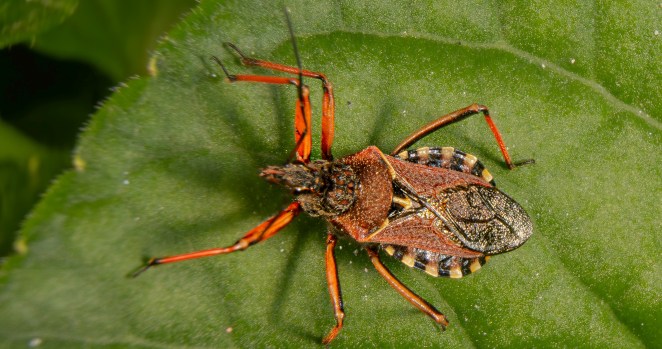
It is not the bite itself that causes the disease. Instead, when the kissing bug bites you, it does something disgusting…it defecates on you as well. This puts the insect’s feces in close proximity to the bite location. When the person decides to scratch their bug bite — because who doesn’t — they rub the feces into the bite wound, resulting in infection.
How It Spreads: Currently, the disease can spread in any of the following ways:
- Infection from contact with kissing bug feces carrying the T. cruzi parasite, either in their bite wound, their eyes, or their mouth.
While rare, you can also become infected from one of the following:
- Mother-to-baby (congenital),
- Contaminated blood products (transfusions),
- An organ transplanted from an infected donor,
- Laboratory accident, or
- Contaminated food or drink.
The Risk in the United States: The CDC shares that “eleven different species of triatomine bugs have been found in the southern United States.” It is currently considered an endemic in the United States. However, with that being said the rate of Chagas disease is still much lower than in other countries.
Schell offers some words of comfort to Wheatland citizens regarding the kissing bug. While he does encourage caution and awareness he shared, “Our risk (for Chagas) in Wyoming is much lower than say Texas or Oklahoma.”